
Healthcare licensing guide by state
Getting licensed in healthcare doesn’t have to be overwhelming, but every state has its own requirements. Training hours, licensing exams, renewal rules, and reciprocity processes can vary depending on where you live and which healthcare career you’re pursuing.
Whether you’re beginning your career as a Certified Nursing Assistant (CNA), becoming a Licensed Practical/Vocational Nurse (LPN/LVN), earning your Registered Nurse (RN) license, or expanding your skills with a Medication Aide certification, this guide brings everything together in one place. We cover licensing requirements across Illinois, Indiana, Michigan, Ohio, Tennessee, Texas, and Florida, including: CNA / STNA, LPN / LVN, Registered Nurse (RN), Medication Aide
For every credential, you’ll find training requirements, licensing costs, exam information, expected timelines, renewal rules, and guidance for transferring your license between states.


Not sure where to start? Here’s how to choose
If you’re considering a healthcare career, the number of available credentials can feel confusing. Your ideal path depends on your experience, career goals, and how quickly you’d like to begin working.

“I have no healthcare experience and want to start working in the next 2 months” CNA or STNA (Ohio’s title for the same role) is your path. Training takes 3 to 10 weeks depending on your state, and you can be fully certified and working in under two months in most cases. It’s the fastest way into direct patient care with no prior experience required.

“I’m already a CNA and want to be able to give medications” Look into your state’s Medication Aide certification. The title varies, it’s called a CMT in Illinois, QMA in Indiana, MA-C in Ohio, and CMA in Tennessee, but the idea is the same. It’s an add-on credential for active CNAs that expands what you’re allowed to do on the floor.

“I want a nursing career with better pay and long-term growth.”
If you’re planning a long-term healthcare career, becoming an LPN/LVN is often the next logical step.
Most LPN/LVN programs require 12 to 18 months of education and clinical training. Many nurses later continue through bridge programs to become Registered Nurses.

“I want a clinical career with more responsibility and better pay” An LPN program runs 12 to 18 months and is the most practical next step up. If you want to go further, an RN takes 2 to 4 years but opens significantly more doors, specializations, higher pay, and stronger career mobility. Bridge programs exist in all 7 states covered here that let you move from CNA to LPN, or LPN to RN, faster than starting from scratch.
How the credentials connect, the healthcare career ladder
Healthcare careers are designed to build upon one another. Many professionals begin with a CNA certification before progressing into nursing roles.
Medication Aide certification is an additional qualification earned after becoming a CNA, while LPN and RN licenses represent progressively higher levels of education, responsibility, and earning potential.

| Credential | Typical Training Time | Average Hourly Pay | Common Next Step |
|---|---|---|---|
| CNA / STNA | 3–10 Weeks | $14–$21/hr | Medication Aide or LPN Program |
| Medication Aide | Additional 4–10 Weeks (Active CNA Required) | $17–$24/hr | LPN Program |
| LPN / LVN | 12–18 Months | $22–$30/hr | RN Bridge Program |
| RN | 2–4 Years | $30–$45/hr | BSN, MSN, NP, or Specialty Certifications |
Many healthcare employers actively encourage career advancement, and bridge programs can significantly reduce the time required to move into higher-paying nursing positions.
License requirements by state, side-by-side comparison
Every state has its own rules, and some differences are significant enough to change your timeline, your costs, or your ability to transfer a credential from somewhere else. This table gives you the full picture across all 7 states at once.
| State | CNA / STNA Hours | Med Aide Title | Exam Administrator | NLC Compact? | Renewal Cycle |
|---|---|---|---|---|---|
| Illinois | 120 hrs | CMT | SIUC | No | 24 months |
| Indiana | 75 hrs | QMA | State board | Yes | 24 months |
| Michigan | 75 hrs | Medication Aide | Prometric | Pending | 24 months |
| Ohio | 75 hrs (STNA) | MA-C | Pearson VUE | Yes | 24 months |
| Tennessee | 75 hrs | CMA | Pearson VUE | Yes | 24 months |
| Texas | 100 hrs | Medication Aide | Pearson VUE | Yes | 24 months |
| Florida | 120 hrs | Medication Aide | Pearson VUE | Yes | 24 months |
Four things worth flagging before you read on:
Ohio calls CNAs “STNAs”, State Tested Nurse Aide. It’s the exact same role with the exact same scope of practice. The different title trips up a lot of out-of-state applicants when they’re searching for Ohio jobs, always search “STNA” alongside “CNA” when looking in Ohio.
Texas requires 100 training hours: 25 more than the federal minimum of 75 that most other states follow. If you trained in a 75-hour state and want to transfer your credentials to Texas, you may need to verify that your program meets the Texas equivalency standard before your application is approved.
Illinois and Florida both require 120 hours: the highest of any state in our network. Programs take longer to complete, but the extra training time means graduates tend to be well-prepared for both the exam and real-world patient care.
Michigan’s compact status is pending: the legislation passed, but the implementation wasn’t live as of 2026. If you hold a multistate compact license from another state, you still need a separate Michigan single-state license to work there until implementation is confirmed.
Browse by state, full licensing guides for every credential
We currently publish full licensing guides for seven states. Each state page covers every credential type available in that state, training requirements, exam details, costs, timelines, renewal rules, and reciprocity. Pick your state below.
| State | Licenses Covered | What Makes This State Different |
|---|---|---|
| Illinois | CNA, LPN, RN, CMT | 120-hour CNA training requirement, one of the highest in this network. Illinois is also not part of the NLC compact, meaning nurses still need a separate Illinois license even if they already hold a multistate license. |
| Indiana | CNA, LPN, RN, QMA | Indiana uses the QMA (Qualified Medication Aide) credential, a title unique to the state. QMA certifications generally do not transfer directly into other states without retraining. |
| Michigan | CNA, LPN, RN, Medication Aide | Michigan passed NLC compact legislation, but implementation is still pending as of 2026. Nurses currently still require Michigan-issued single-state licenses. |
| Ohio | STNA, LPN, RN, MA-C | Ohio refers to CNAs as STNAs (State Tested Nursing Assistants). Same role, different terminology, which matters when searching for jobs or transferring credentials. |
| Tennessee | CNA, LPN, RN, CMA | Strong rural healthcare demand makes Tennessee one of the more accessible states for newly certified CNAs. Compensation is also competitive relative to local living costs. |
| Texas | CNA, LVN, RN, Medication Aide | Texas requires 100 CNA training hours, above the federal minimum. The state also uses the title LVN (Licensed Vocational Nurse) instead of LPN. |
| Florida | CNA, LPN, RN, Medication Aide | Florida requires 120 CNA training hours, similar to Illinois. Its large retiree population creates steady, year-round demand for CNAs and HHAs statewide. |
Browse by role, find what you need by credential type
Looking for information on a specific license rather than a specific state? Jump to the role that applies to you. Each role page covers all 7 states with full detail on requirements, costs, and renewal.
| Role | Training Time | Est. Total Cost | Transfers Between States? |
|---|---|---|---|
| CNA / STNA | 3–10 weeks | $500–$2,000 | Via reciprocity through each state’s Nurse Aide Registry. Generally straightforward, though Texas includes an additional 100-hour equivalency review. |
| LPN / LVN | 12–18 months | $10,000–$25,000 | Transfers through endorsement via the Board of Nursing. If both states are part of the NLC compact, a separate license may not be required. |
| RN | 2–4 years | $20,000–$80,000 | Typically transferred via endorsement. Compact-state RNs can often practice across member states without applying for a separate license. |
| Medication Aide |
+4–10 weeks
(active CNA required first) |
$200–$800 add-on | Does not transfer cleanly between states. Titles and training requirements vary widely, so most states require retraining even for currently certified aides. |
The Nurse Licensure Compact, What it is and how it affects you
If you’re an LPN/LVN or RN and plan to work in multiple states, understanding the Nurse Licensure Compact (NLC) is essential.
The Enhanced Nurse Licensure Compact (eNLC) allows eligible nurses to practice in multiple participating states using a single multistate nursing license.
| State | NLC Status | What This Means for You |
|---|---|---|
| Texas | Full member | A Texas nursing license allows eligible nurses to practice in all 43 compact states without applying for additional single-state licenses. |
| Indiana | Full member | An Indiana multistate license is valid across all active NLC compact states. |
| Ohio | Full member | Ohio nurses with a compact license can legally practice in participating compact states without separate endorsements. |
| Tennessee | Full member | Tennessee is fully integrated into the NLC, allowing multistate nursing practice privileges. |
| Florida | Full member | A Florida compact nursing license grants practice access throughout all participating NLC states. |
| Michigan | Pending | Michigan passed NLC legislation, but implementation is not active as of 2026. Nurses still require a Michigan-issued single-state license. |
| Illinois | Not a member | Illinois has not joined the Nurse Licensure Compact. Nurses must always obtain a separate Illinois nursing license, even if they already hold a valid compact license. |
Important: The Nurse Licensure Compact only applies to LPN/LVN and RN licenses. CNA and Medication Aide certifications follow separate state reciprocity or endorsement processes.
Moving states? Here’s how license transfers actually work
CNA / STNA Reciprocity
Certified Nursing Assistants generally transfer their certification through the destination state’s Nurse Aide Registry.
You’ll typically need to:
- Maintain an active certification
- Be in good standing
- Submit reciprocity paperwork
- Complete a new background check if required
Texas may also review your original training hours before approving certification.
LPN / LVN Endorsement
Licensed Practical and Licensed Vocational Nurses transfer through endorsement with the receiving state’s Board of Nursing.
If both your current and destination states participate in the Nurse Licensure Compact and you qualify for multistate privileges, additional licensing may not be necessary.
RN Endorsement
Registered Nurses follow a similar endorsement process.
Compact-state RNs often enjoy the greatest flexibility because one multistate license may authorize practice across multiple participating states.
Medication Aide Transfers
Medication Aide credentials rarely transfer directly.
Each state uses different titles, curriculum standards, examination requirements, and scope-of-practice rules. Because of these differences, many states require applicants to complete their own Medication Aide training before certification.
| Credential | Transfer Method | Difficulty | Key Thing to Watch For |
|---|---|---|---|
| CNA / STNA | Reciprocity via state Nurse Aide Registry | Straightforward | Certification must remain active and in good standing. Texas also requires a 100-hour training equivalency review, and a new background check is required in the destination state. |
| LPN / LVN | Endorsement via Board of Nursing | Moderate | If both states participate in the Nurse Licensure Compact (NLC), a separate license may not be required. |
| RN | Endorsement via Board of Nursing | Moderate | The same NLC compact rule applies. Compact-state RNs can often practice without completing endorsement again. |
| Medication Aide | Usually requires full retraining in the new state | Difficult | Medication aide titles, regulations, and training standards vary heavily by state, so most states do not accept out-of-state medication aide credentials. |
Background checks, what to expect and what happens
Every credential type we cover requires a background check before you can start working in most healthcare settings. This is true across all 7 states regardless of the role.
Here’s what the process looks like for each credential type:
CNA / STNA
Most states require state or county criminal background checks before employment. Some, including Illinois, also require fingerprint-based screening.
LPN / LVN and RN
Boards of Nursing conduct more comprehensive background investigations during the licensing process. These reviews often include fingerprinting, criminal history, and previous disciplinary actions.
Medication Aide
Medication Aide applicants generally complete additional background screening as part of their certification process or through their employer.
Even if you’ve already completed a background check in another state, you’ll typically undergo a new screening when relocating.
Common Disqualifying Offenses
- Abuse or neglect of a patient
- Misappropriation of resident property
- Certain drug-related convictions
- Fraud or violent criminal offenses
Exact rules vary by state. An offense that blocks certification in one state may still qualify for review in another.
Waiver & Appeal Process
Most states provide a formal waiver or appeal process allowing applicants to be reviewed case-by-case instead of receiving an automatic denial.
Other states offer similar review systems under different names.
You Can Usually Start Training First
In most states, students are allowed to enroll in and complete CNA training programs before their background check review is finalized.
The background check is typically required before employment, not before training. That means you can continue preparing while the waiver or review process is underway.
BLS and ACLS, the certifications every healthcare worker needs
Regardless of which state you work in or which credential you hold, almost every direct-care role in healthcare requires a current BLS certification. It’s not state-specific and it’s not credential-specific, it’s a baseline requirement across the board.
| Certification | Typically Required For | Validity | Average Cost |
|---|---|---|---|
| BLS (Basic Life Support) | CNA, Medication Aide, LPN/LVN, RN | 2 Years | $30–$80 |
| ACLS (Advanced Cardiovascular Life Support) | Acute-Care and Specialty RNs | 2 Years | $150–$200 |
| CPR Certification | Many CNA Programs and Healthcare Employers | 1–2 Years | $25–$60 |
A few things worth knowing before you book a course:
Online-only BLS and CPR courses are not accepted by most healthcare employers. The skills portion, compressions, AED use, rescue breathing, has to be demonstrated in person. Hybrid courses that combine online learning with an in-person skills check are widely available and accepted.
If your BLS is expiring, you don’t need to redo the full course from scratch. A shorter BLS renewal (also called a recertification or HeartSaver renewal) is available from approved providers and takes about 30–60 minutes compared to the 3–4 hours for initial training.
MyShyft requires a current BLS card for nearly all shifts on the platform. When you credential through the app, you’ll upload your card as part of the process. Make sure the card shows your name, the issuing organisation (AHA or Red Cross), and a valid expiration date.
Renewing your license, what every credential requires
All five credential types require renewal on a regular cycle, but the rules are quite different depending on which credential you hold. CNAs and STNAs renew based on work activity. LPNs and RNs renew based on continuing education hours. Medication Aides are tied directly to their CNA renewal. And BLS and ACLS follow their own 2-year cycle regardless of the clinical credential.
| Credential | Renewal Cycle | Work / Activity Requirement | CEUs Required? | If Your Certification Lapses |
|---|---|---|---|---|
| CNA / STNA | Every 24 months | At least 8 hours of paid CNA work during the renewal period. Volunteer hours do not count. | No, renewal is work-activity based, not CEU based. | Retraining through a state-approved program or retesting is usually required before returning to active status. |
| LPN / LVN | Usually every 1–2 years | Active clinical practice hours | Yes, typically 20–30 continuing education hours per renewal cycle. | Board of Nursing reinstatement process required. Requirements vary by state. |
| RN | Usually every 1–2 years | Active clinical practice hours | Yes, typically 20–30 continuing education hours per renewal cycle. | Board of Nursing reinstatement process required. Requirements vary by state. |
| Medication Aide | Every 24 months with CNA renewal | Tied to CNA work-hour requirements | Varies by state | The Medication Aide credential lapses if the underlying CNA certification lapses. |
| BLS / ACLS | Every 24 months | N/A | Recertification class required | Full retake required. Expired certification cannot be used for employment. |
One practical note for CNAs: the 8-hour work requirement is easy to satisfy even if you’re not working full time. Even occasional per-diem or PRN shifts count toward the requirement. If you’re taking a break from full-time work, keeping a few shifts on your schedule every couple of months is the simplest way to protect your active status and avoid the retraining requirement that comes with a lapse.
How to Start Working Through MyShyft
If you already hold an active healthcare license or certification in one of our supported states, you can begin the credentialing process immediately.
Download the MyShyft app and create your profile
The MyShyft app is available on both iOS and Android devices. Profile setup typically takes around 10 minutes.
Upload your documents
Submit your active license or certification, current BLS card, and a valid government-issued ID.
Start claiming shifts
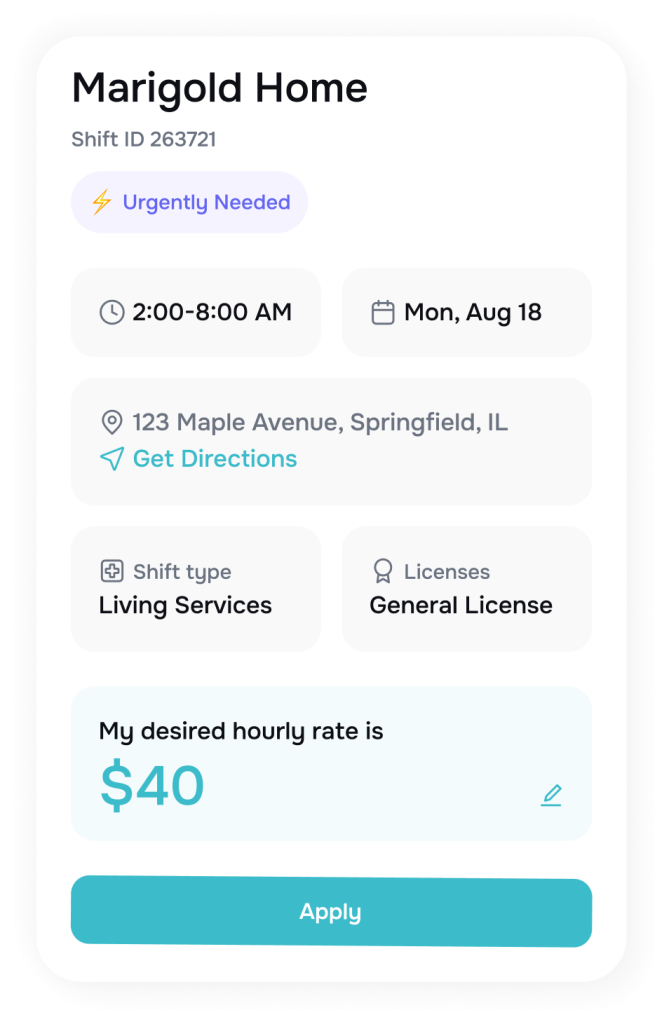
Browse open shifts by location, date, facility type, and pay rate.
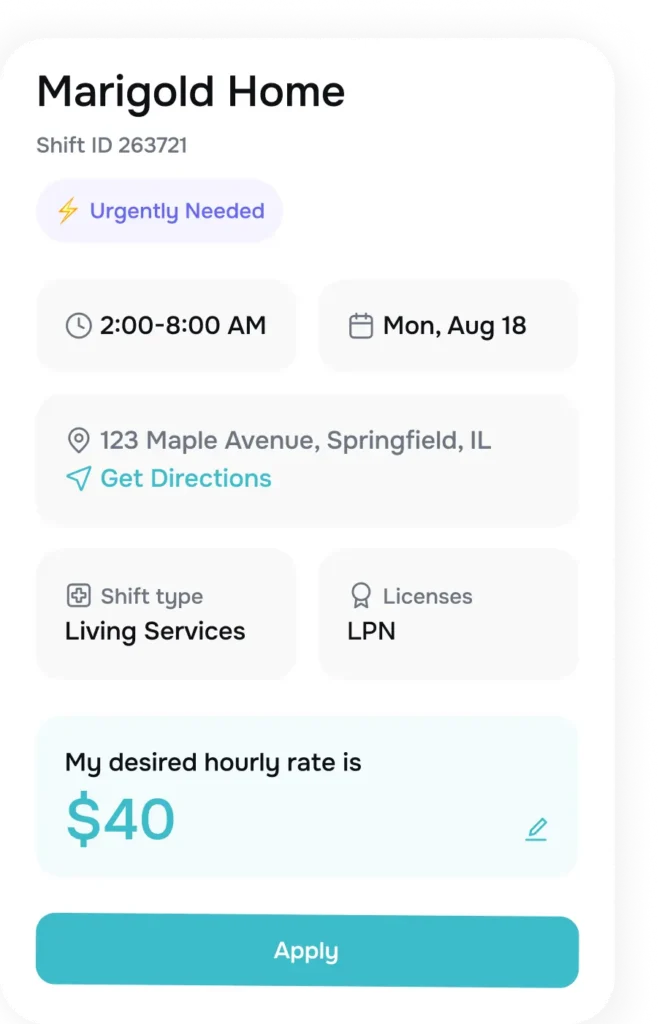
Every shift clearly displays experience requirements, certifications, and specialty expectations before you claim it.

Contact Us
Experience requirements vary by shift, not by platform. Some facilities are comfortable with new graduates; others ask for 6 to 12 months of experience in a specific setting like long-term care or acute care. The app shows you exactly what’s required before you commit to a shift.
Already licensed and ready to go? Download the MyShyft app, complete credentialing, and start claiming shifts at facilities near you, on your schedule.
Frequently Asked Questions
Licensing Information Disclaimer:
Licensing requirements, fees, examination details, renewal standards, and Nurse Licensure Compact participation may change over time. While we strive to keep this information current and accurate, MyShyft does not guarantee the completeness or accuracy of the information provided. Always verify licensing requirements directly with the Texas Board of Nursing before making educational, licensing, employment, or relocation decisions. Reliance on information contained on this page is at the reader’s own risk.