
Florida Nursing Licensing Guide
Everything CNAs, LPNs, & RNs need to get licensed in Florida
Florida is a Nurse Licensure Compact (NLC) state, one of the busiest travel nurse markets in the country, and home to one of the most active nursing workforces in the US. Florida is home to one of the largest nursing workforces in the United States, with hundreds of thousands of licensed nurses working across hospitals, long-term care facilities, home health agencies, and ambulatory settings.
Whether you’re applying for your first license, transferring from another state, or preparing for renewal, understanding Florida’s licensing requirements is essential.
What makes Florida different from most states isn’t just the volume, it’s the CE requirements. Most Florida nurses must complete 24 CE hours during each renewal cycle, including several mandatory state-required topics. Requirements can vary based on license type and renewal status, so it’s important to understand what’s required before your renewal deadline. Missing a required course can delay license renewal and create unnecessary complications.

Who’s in Charge of Your License in Florida?
| Your Role | Regulated By | Portal |
|---|---|---|
| RN, LPN | Florida Board of Nursing (FBON) under Florida Department of Health | floridasnursing.gov |
| CNA | Florida Department of Health (FDOH) via Florida Nurse Aide Registry | floridahealth.gov |
Who’s in Charge of Your License in Florida?
The Florida Board of Nursing operates under the Florida Department of Health and handles all RN and LPN licensing, initial applications, endorsements, renewals, and verifications. Most licensing, renewal, and verification services for nurses are managed through the Florida Department of Health’s Medical Quality Assurance (MQA) portal.
- License lookup: FDOH MQA License Verification
- MQA portal (applications and renewals): flhealthsource.gov
How long does FBON take?
| Application Type | Typical Timeline |
|---|---|
|
Endorsement
Out-of-state transfer
|
Often 2–8+ weeks |
|
Initial licensure
Post-NCLEX application
|
Often 2–6+ weeks |
| Online renewal | Often processed within days to a few weeks |
The most common delays are incomplete applications, missing supporting documents, and delayed Nursys verification. If you’re applying by endorsement, submit your Nursys verification request as early as possible to help avoid processing delays.
A Note on Medication Aides in Florida
Florida does not use the Certified Medication Technician (CMT) title used in some other states. Instead, Florida recognizes Qualified Medication Aides (QMAs), who may administer certain medications in approved settings after meeting state training and competency requirements. If you hold a CMT or medication aide credential from another state, contact the Florida Board of Nursing to determine whether additional training or certification is required before working in Florida.
What Does Your Role Actually Require in Florida?
| Role | Licensing Body | Exam | Renewal | CE Required | Registry |
|---|---|---|---|---|---|
| CNA | Florida Department of Health / Nurse Aide Registry | NNAAP | Ongoing registry maintenance |
24 hrs/cycle
In-service for facility CNAs
|
Florida Nurse Aide Registry |
| LPN | Florida Board of Nursing | NCLEX-PN | Every 2 years | Generally 24 CE hours per renewal cycle* | None |
| RN | Florida Board of Nursing | NCLEX-RN | Every 2 years | Generally 24 CE hours per renewal cycle* | None |
* CE requirements vary based on license type, renewal status, and exemptions.
Sources: Florida Nurse Practice Act, Chapter 464 F.S.·Florida Admin. Code 64B9·floridahealth.gov
Florida IS a Compact State, What That Means for You
Florida joined the Nurse Licensure Compact (NLC) in January 2018, making it easier for eligible nurses to practice across participating states without obtaining a separate nursing license in each one.
How the NLC Works in Florida
The NLC allows nurses who hold a multistate license issued by a compact-member state to practice in Florida and other participating compact states. If your primary state of residence is a compact state and you hold a valid multistate license, you can generally begin working in Florida without obtaining a separate Florida nursing license.
Who Benefits From Florida’s Compact Membership
- Travel nurses from compact states: multistate license generally allows you to accept Florida assignments without obtaining a separate Florida license.
- Nurses relocating to Florida from a compact state: once Florida becomes your primary state of residence, you’ll need to apply for Florida licensure and, if eligible, obtain a Florida multistate license.
- Staffing agencies: compact membership simplifies Florida placements considerably. Verify the nurse holds a multistate license from a compact home state and you’re covered for Florida assignments.
Who Still Needs a Separate Florida License
Compact membership doesn’t cover every situation. You still need a standalone Florida license if:
- Your home state is not a compact member: California, New York, and a few others remain non-compact
- You hold a single-state license rather than a multistate license, even if your home state is compact
- Florida is becoming your primary state of residence, you’ll need to convert to a Florida multistate license through FBON
The primary residence rule. Your NLC multistate license is tied to your primary state of residence, not where you work. If Florida becomes your primary residence, you must hold a Florida multistate license even if you travel to other compact states for work.
How to Transfer Your License to Florida
Nurses coming from non-compact states, or compact state nurses with single-state licenses, go through endorsement. Here’s how it works by role.
RN and LPN Endorsement (FBON)
- Create an account at the FDOH MQA portal
- Complete the endorsement application and pay the required fee. Verify current fees through the Florida Board of Nursing before applying.
- Request license verification from your current state via Nursys, most states send this directly to FBON electronically
- Submit official transcripts or additional documentation if requested by the Board.
- Complete a Florida Level 2 background screening, more on this below
- Track your application through the MQA portal, Processing times vary. Complete applications are often processed within several weeks, though delays can occur if documentation is missing.
Florida’s endorsement fees are among the higher end nationally. Be sure to budget for application fees, fingerprinting, background screening, and any required verification costs.
CNA Endorsement / Reciprocity (FDOH)
To transfer a CNA certification to Florida’s Nurse Aide Registry:
- Your out-of-state certification must be current and in good standing
- No substantiated findings of abuse, neglect, or misappropriation on your record
- Meet Florida’s eligibility requirements for Nurse Aide Registry placement
Steps:
- Submit the Florida NAR Reciprocity Application to FDOH
- Provide proof of out-of-state certification and training completion
- Complete a Level 2 background screening
- FDOH verifies your status with your prior state before adding you to the Florida NAR
Source: Florida NAR·42 CFR Part 483
CE Rules in Florida, More Than Most States Require
Most Florida RNs and LPNs must complete 24 CE hours per 2-year renewal cycle, including several mandatory topics. Requirements can vary based on license status, renewal period, and specific exemptions, so always verify current requirements with the Florida Board of Nursing.
| Role | Hours per Cycle | Cycle | Mandatory Inclusions |
|---|---|---|---|
| RN | *24 contact hours* | 2 years | Florida Board-required topics |
| LPN | *24 contact hours* | 2 years | Florida Board-required topics |
| CNA | 12 hours annual in-service training | Annual | Employer-provided, per 42 CFR 483.35 |
*Most actively licensed Florida nurses.
The Mandatory CE Topics, Know These Before You Renew
Florida’s CE requirements include several mandatory topics that must be completed at specific intervals. Not every topic is required every renewal cycle, so nurses should verify current Florida Board of Nursing requirements before renewing their license.
| CE Topic | Hours Required | Frequency |
|---|---|---|
| Prevention of Medical Errors | 2 hours | Every renewal cycle |
| Recognizing Impairment in the Workplace | 2 hours | Every renewal cycle |
|
Laws and rules
Florida Nurse Practice Act
|
1 hour | Every third renewal (6 years) |
| Domestic violence | 2 hours | One-time, first renewal only | Human Trafficking | 2 hours | Required when applicable under Florida BON rules |
| Provider | Website |
|---|---|
| American Nurses Association (ANA) | nursingworld.org |
| Nurse.com CE Center | nurse.com/ |
| Relias Learning | relias.com |
| Medscape Nursing | medscape.com/nurses |
| AANP | aanp.org |
| Florida Nurses Association (FNA) | floridanurse.org |
Verify CE provider approval status directly at floridasnursing.gov before purchasing a course.
The Florida Nurse Aide Registry
The Florida Nurse Aide Registry is the official database used to verify the certification status of Certified Nursing Assistants throughout the state.
Healthcare employers rely on the registry to confirm that CNA applicants meet Florida’s certification requirements before employment. Maintaining an active registry status is essential for remaining eligible to work as a Certified Nursing Assistant in Florida.
| Role | Registry Required? |
|---|---|
| CNA | Yes – Florida Nurse Aide Registry |
| RN | No |
| LPN | No |
Employer Responsibilities
Federal regulations and Florida requirements place important responsibilities on employers hiring Certified Nursing Assistants.
Healthcare employers are generally expected to:
- Verify a CNA’s registry status before employment.
- Confirm there are no substantiated findings involving abuse, neglect, or misappropriation.
- Maintain documentation supporting employment eligibility.
- Report required findings to the appropriate regulatory authority when applicable.
Staffing agencies should also verify credentials before placing healthcare professionals in client facilities and maintain appropriate records for compliance purposes.
Florida’s Level 2 Background Screening, What Makes It Different
Florida requires a Level 2 Background Screening for Certified Nursing Assistants (CNAs) and many other healthcare professionals before they can work in regulated healthcare settings.
Level 2 screening in Florida includes:
- FBI fingerprint-based national criminal history check
- Florida Department of Law Enforcement (FDLE) state criminal history check
- Search of the National Sex Offender Public Website
- Check against the Dru Sjodin National Sex Offender Public Website
- Review of the Nurse Aide Registry and other applicable abuse registries
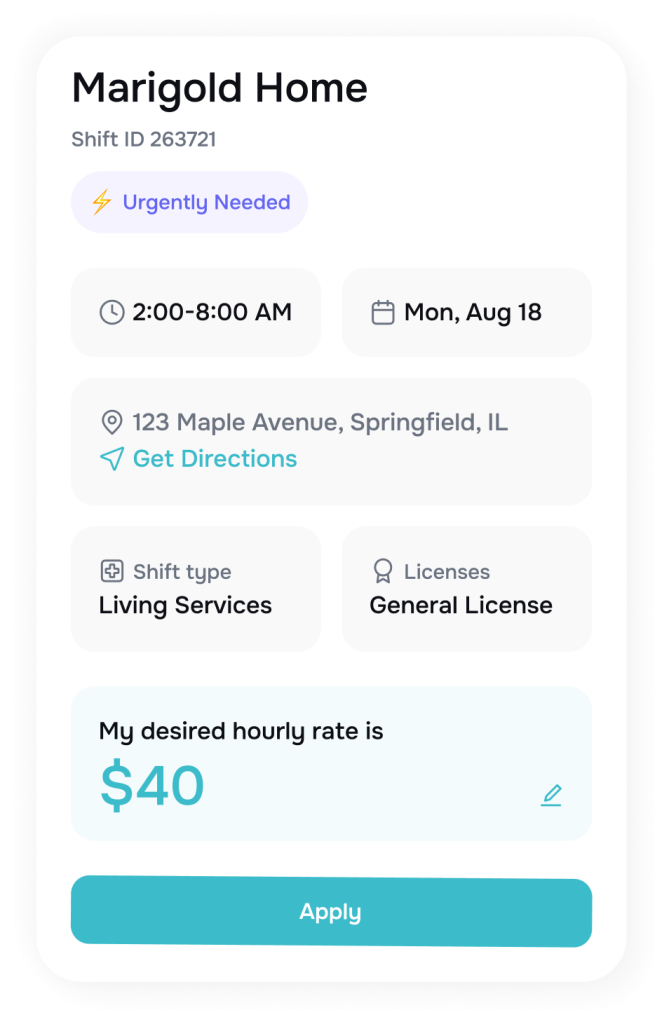
Once your Florida license, multistate practice privilege, or CNA registry status is active, Explore PRN healthcare shifts in Florida to find local opportunities, supported roles, and pay information in Jacksonville, Miami, Orlando, Port St. Lucie, St. Petersburg, and Tampa.

Everything You Need to Know About Renewing Your Florida License
Florida RN and LPN licenses generally renew every two years, with expiration dates tied to the licensee’s birth month and renewal schedule established by the Florida Board of Nursing.
| Role | Cycle | Notes |
|---|---|---|
| RN | 2 years | Expires according to Florida Board of Nursing renewal schedules |
| LPN | 2 years | Expires according to Florida Board of Nursing renewal schedules |
| CNA (NAR) | Registry maintenance required | Must meet Florida Nurse Aide Registry requirements to remain eligible |
How to Renew Online (RN, LPN)
- Log in to the FDOH MQA portal
- Select “Renew a License” and choose your license type
- Attest to CE completion, have your certificates on hand, FBON conducts CE audits
- Confirm all required CE topics have been completed based on your renewal cycle and Florida Board of Nursing requirements.
- Pay the renewal fee
- Save your renewal confirmation as proof of active status
Missed Your Renewal Date?
- Florida may allow late renewal for eligible licensees, subject to applicable fees and Board requirements.
- Additional fees may apply for late renewal.
- Practicing on an expired license violates Florida Statute Chapter 464, this is actively enforced by FDOH
Expired beyond the late renewal window? You’ll need formal reinstatement. Florida reinstatement may require additional CE documentation, a background screening, and board review depending on how long the license has been expired.
Source: FBON Renewal Information· Chapter 464 F.S.
The Intervention Project for Nurses (IPN)
Florida operates the Intervention Project for Nurses (IPN), a state-authorized program that supports nurses whose ability to practice safely may be affected by substance use disorders, mental health conditions, or certain physical impairments. IPN’s mission is to protect public safety through education, monitoring, support, and referral services for eligible nurses
In some situations, participation in IPN may provide an alternative to traditional disciplinary proceedings through the Florida Board of Nursing. Nurses may enter the program through self-referral, employer referral, treatment provider referral, or referral from the Florida Department of Health or Board of Nursing.
If you’re a Florida nurse facing these challenges, IPN is worth knowing about before a licensing issue arises.
IPN Website: ipnfl.org
Go Deeper, Pick Your Role
This page covers Florida-wide licensing rules. Each role guide provides detailed information on eligibility, exams, applications, fees, renewals, and applicable state requirements.
| Role | What the guide covers | Regulatory body |
|---|---|---|
| CNA Florida → | NNAAP exam, training requirements, Florida Nurse Aide Registry eligibility, background screening, and reciprocity information | FDOH / Florida Nurse Aide Registry |
| LPN Florida → | NCLEX-PN, licensure application, continuing education requirements, and endorsement information | Florida Board of Nursing / FDOH |
| RN Florida → | NCLEX-RN, licensure application, continuing education requirements, and Nurse Licensure Compact (NLC) information | Florida Board of Nursing / FDOH |
Frequently Asked Questions
Licensing Information Disclaimer: Licensing requirements, fees, examination details, renewal standards, and Nurse Licensure Compact participation may change over time. While we strive to keep this information current and accurate, MyShyft does not guarantee the completeness or accuracy of the information provided. Always verify licensing requirements directly with the Florida Board of Nursing before making educational, licensing, employment, or relocation decisions. Reliance on information contained on this page is at the reader’s own risk.